Welcome to Yongle Group pyrolysis & refining equipment manufacturer. For product inquiries: nicole@yongleep.com



Township and village-level sanitation stations are the grassroots frontline of urban and rural solid waste governance, and the degree of standardization of station construction directly determines the level of regional waste disposal and environmental management. At present, many grassroots sanitation stations have relatively single functions, serving only as temporary waste storage and transfer points, lacking end-of-pipe harmless disposal capacity, overly relying on off-site transport, and suffering from short governance chains, weak disposal capacity, and insufficient environmental control. Upgrading grassroots sanitation stations, improving end-of-pipe disposal supporting facilities, and building integrated station models combining storage, disposal, purification, and management are the key tasks of grassroots sanitation construction. Household waste treatment equipment, relying on an oxygen-free low-temperature continuous pyrolysis process, matches grassroots station construction standards, fills the grassroots disposal gap, and supports the implementation of standardized station construction. Henan Yongle Group has optimized the equipment's compact, integrated, and standardized configuration according to grassroots station construction specifications, matching the normalized construction needs of grassroots sanitation.
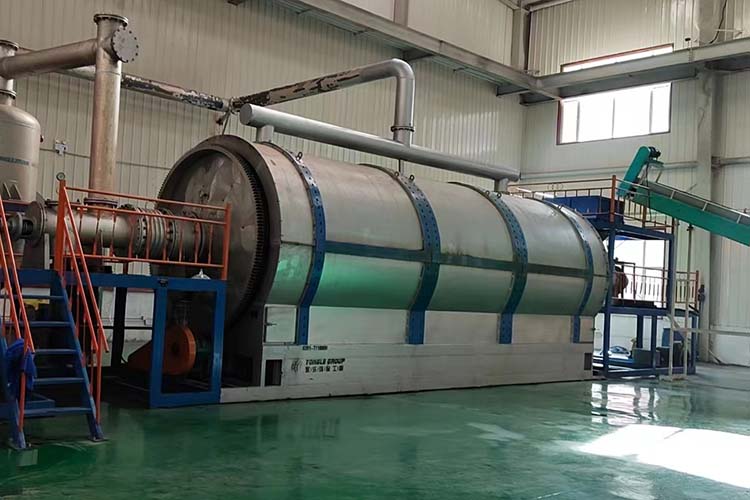
Household waste treatment equipment adopts an integrated modular design with complete functions and an orderly layout, matching the standardized construction requirements of grassroots sanitation stations, and can be directly installed in various township and village-level sanitation stations. The equipment is fitted with a sealed feeding system, an oxygen-free pyrolysis reaction system, a product separation system, a tail gas purification system, and an intelligent control system, integrating waste disposal, exhaust gas treatment, product storage, and intelligent monitoring functions, enriching the functional attributes of grassroots stations and changing the traditional single model of storage and transfer only.
The oxygen-free low-temperature continuous pyrolysis process operates in a standardized and stable manner, adapting to the various mixed household waste received daily by grassroots stations. It requires no complex pretreatment and matches the operation and maintenance conditions of grassroots stations. The entire operation is fully sealed and closed-loop, with no open operation links, effectively solving common problems at grassroots stations such as exposed waste, odor spread, mosquito and fly breeding, and messy sites, standardizing the station working environment and improving the overall tidiness of the station.
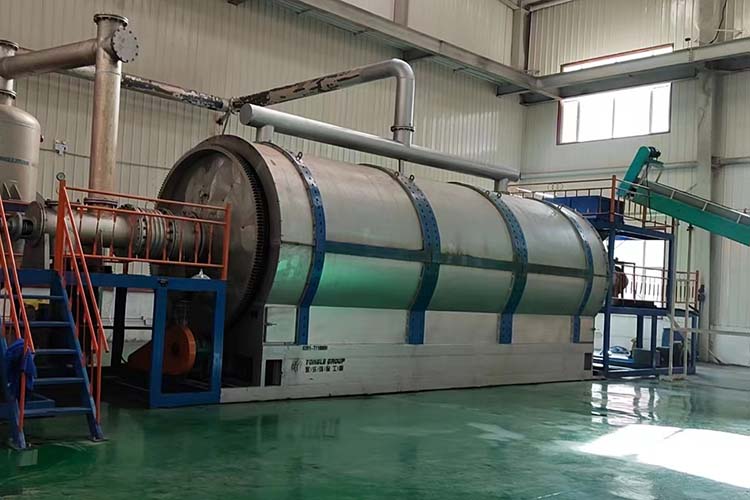
After the equipment is deployed, grassroots sanitation stations can achieve on-site standardized waste disposal without high-frequency off-site transfer, effectively relieving station storage pressure, avoiding long-term waste accumulation, and filling the grassroots end-of-pipe disposal gap. Standardized disposal processes unify grassroots waste governance standards, narrow the urban-rural sanitation governance gap, and push grassroots sanitation work toward standardization and institutionalization.
Relying on the equipment's resource recycling system, grassroots stations can achieve on-site consumption and utilization of waste, improving the station's green operation system. Pyrolysis self-sustaining heating reduces station energy expenses, and harmless solid products can be used for local greening and site improvement, giving grassroots sanitation stations multiple functions of waste disposal, ecological maintenance, and energy saving, and enhancing the station's comprehensive utilization value.
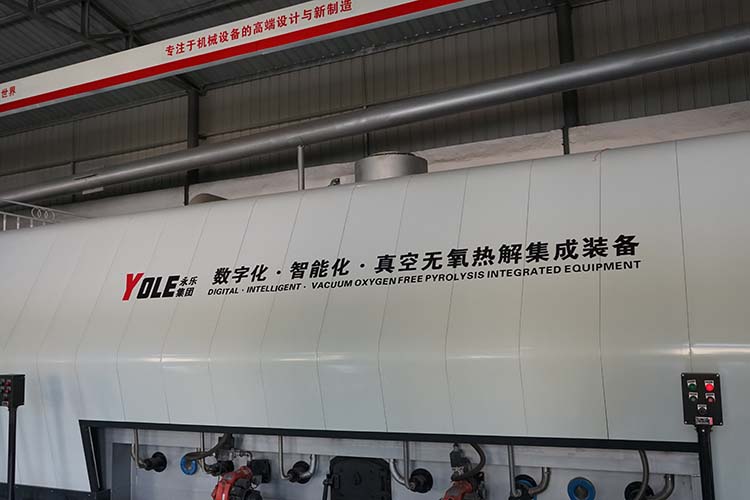
The standardized construction of grassroots sanitation stations is a foundational project for comprehensive environmental governance. Henan Yongle Group continuously optimizes the integration and standardization performance of its household waste treatment equipment, matches grassroots station construction specifications, and supports all localities in improving grassroots sanitation infrastructure, consolidating the grassroots position of urban and rural solid waste governance.