Welcome to Yongle Group pyrolysis & refining equipment manufacturer. For product inquiries: nicole@yongleep.com



With the continuous development of transportation and engineering sectors, the volume of waste tires generated increases year by year. This type of solid waste features special materials, a stable structure, and a long natural degradation cycle. Long-term stockpiling occupies land resources and easily triggers regional sanitation problems, exerting sustained impacts on soil and water bodies. As solid waste treatment standards continue to improve, traditional stockpiling and simple disposal methods can no longer meet current treatment requirements, making the specialized, resource-oriented treatment of waste tires a key industry research direction. Harmless processing of waste tires through pyrolysis technology achieves solid waste reduction and resource recovery, and is currently one of the most widely adopted treatment methods in the industry. In line with the industry's process development trends, Henan Yongle Group continuously optimizes equipment structure and operation logic, launching waste tire refining equipment suited to various working conditions and providing equipment and technical support for the standardized treatment of rubber solid waste.
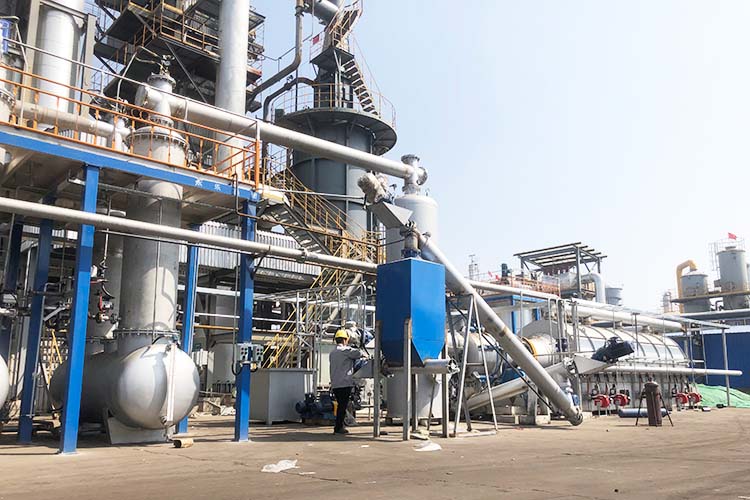
Waste tire refining equipment centers on sealed pyrolysis technology, with an overall process design aligned with cleaner production requirements. The equipment completes the pyrolysis of waste tires in an oxygen-free sealed environment, decomposing materials at controllable temperatures and orderly separating organic components from solid materials. By-products such as tail gas generated during production undergo multi-stage treatment through the supporting purification system, and the final emissions comply with regional environmental management standards. The fully enclosed structural layout effectively reduces dust dispersion and gas leakage, no wastewater is discharged during production, and the overall working environment remains clean and tidy, preventing secondary pollution. Materials processed by the equipment are clearly categorized, and rubber cracking products, steel wire, and fiber can all be recovered and stored for subsequent industrial reuse, improving the resource utilization efficiency of waste tires.
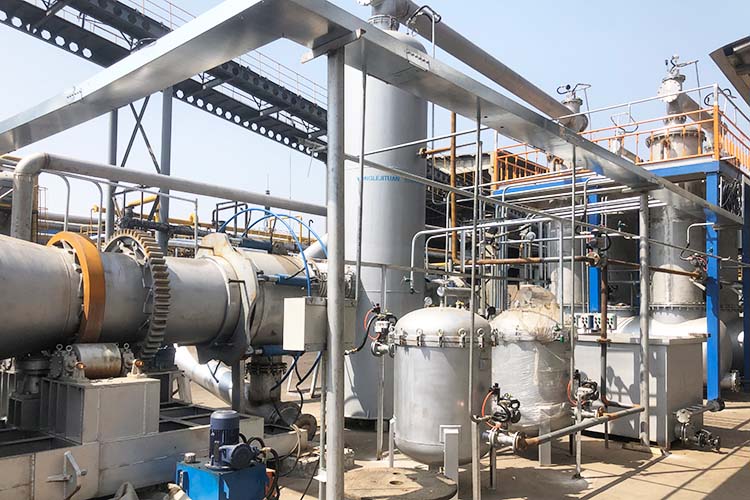
The equipment adopts a modular combined design, with each functional zone clearly divided and operating stably. The pretreatment unit handles tire crushing, sorting, and impurity removal, standardizing material form and ensuring uniform feeding; the pyrolysis reaction unit completes material conversion under sealed, constant-temperature conditions, achieving harmless solid waste disposal; the oil-gas separation unit collects pyrolysis products by category, improving material recovery orderliness; the tail gas purification unit filters and renders waste gas harmless, ensuring production compliance; and the intelligent control unit records equipment operating data in real time, assisting operators with parameter adjustment and daily maintenance. With multiple systems working in coordination, the complete unit can adapt to long-term continuous production conditions and meet the normalized operation needs of solid waste treatment projects.
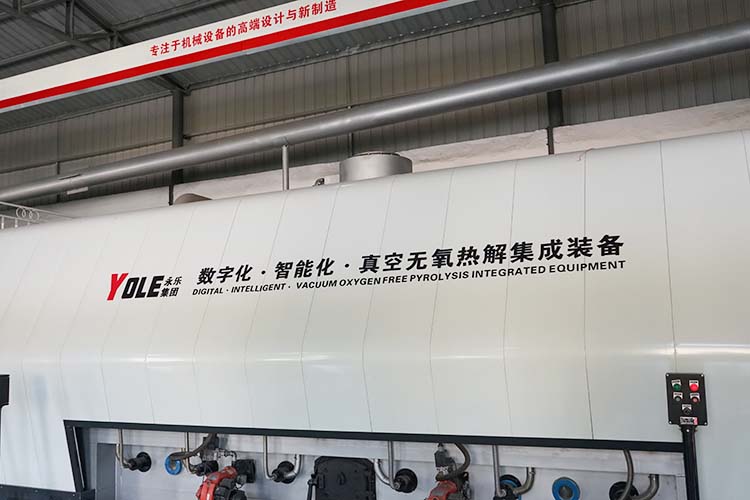
At present, waste tire refining equipment is widely used in renewable resource processing, centralized solid waste disposal, rubber recycling, and related scenarios. The equipment continuously consumes regional waste tire stockpiles, relieves solid waste treatment pressure, and through the resource regeneration model, improves the rubber resource recycling chain, supporting the steady development of the regional circular economy.