Welcome to Yongle Group pyrolysis & refining equipment manufacturer. For product inquiries: nicole@yongleep.com



The continuous development of transportation, engineering machinery, and other industries has accelerated the replacement of rubber tires in the market, and the waste rubber tires generated each year form a stable solid waste stock. These rubber products are dense in structure, corrosion-resistant, and difficult to degrade, and cannot fully decompose in the natural environment for decades. Large-scale concentrated piles of waste tires not only occupy land resources; the piled materials also easily breed debris and accumulate standing water, and under long-term natural weathering, adversely affect the surrounding soil, water, and air environment. For large volumes of waste tires, mere landfilling and stockpiling can no longer meet current ecological governance and industry development requirements; promoting professional and standardized resource recovery has become the mainstream direction of the industry. Henan Yongle Group specializes in the research, development, and manufacturing of environmental solid waste treatment equipment. Combining industry process standards with on-site production conditions, it has developed waste tire refining equipment to provide hardware support for the development of the rubber solid waste recycling industry.
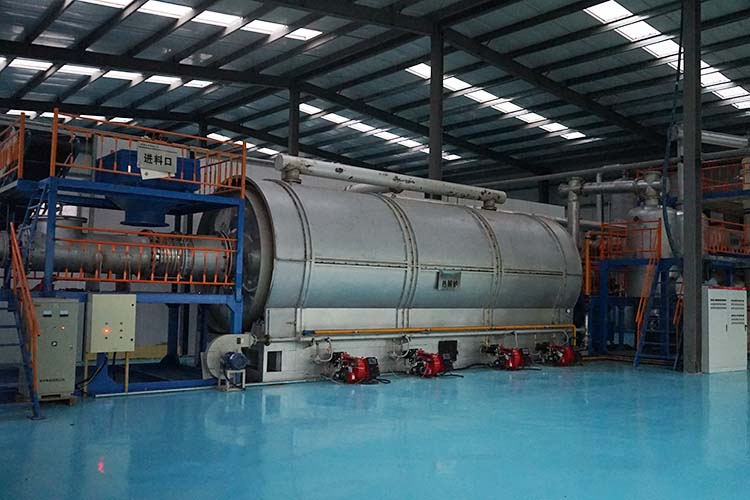
Waste tire refining equipment operates on a mature anaerobic sealed pyrolysis process, and the entire production process complies with domestic clean production regulations. The equipment completes the pyrolysis decomposition of waste tires in a fully sealed, oxygen-isolated environment, controlling the reaction process through precise temperature control and orderly separating the organic components from the solid materials. By-products such as tail gas generated during production are harmlessly treated by the equipment's supporting multi-stage purification system, with treated emission indicators meeting the environmental control standards of various regions. The equipment adopts an integrated sealed body and pipeline design, controlling dust diffusion and gas leakage at the source. No production wastewater is discharged throughout the process, effectively preventing secondary pollution and keeping the plant working environment clean and compliant. After processing by the equipment, the rubber, steel wire, and nylon fiber in waste tires can be precisely separated; the classified collected materials are in a stable state and can be used as recycled raw materials in various industrial production scenarios, realizing the recycling and reuse of waste rubber resources.
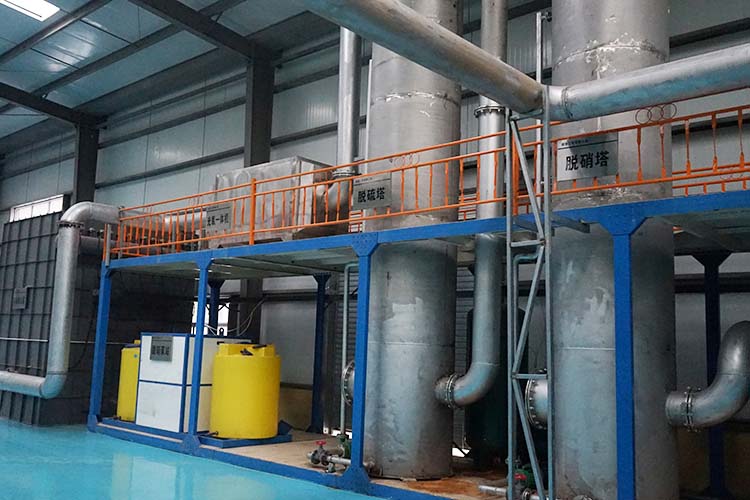
Based on implementation feedback from various solid waste treatment projects, Henan Yongle Group continuously optimizes the modular structure of waste tire refining equipment. The complete set consists of a pretreatment system, a pyrolysis reaction system, an oil-gas separation system, a tail gas purification system, and an intelligent control system, which work in coordination to form a complete treatment loop. The pretreatment system is responsible for crushing, sorting, and impurity removal of waste tires, unifying material specifications and ensuring uniform and stable feeding; the pyrolysis reaction system completes harmless material conversion under constant-temperature sealed conditions, achieving volume reduction of solid waste; the oil-gas separation system classifies the mixed pyrolysis products and standardizes the material collection process; the tail gas purification system filters and adsorbs exhaust impurities layer by layer, ensuring compliance in the production stage; the intelligent control system monitors equipment operating data in real time, assisting staff in adjusting operating conditions and reducing the difficulty of daily equipment maintenance.
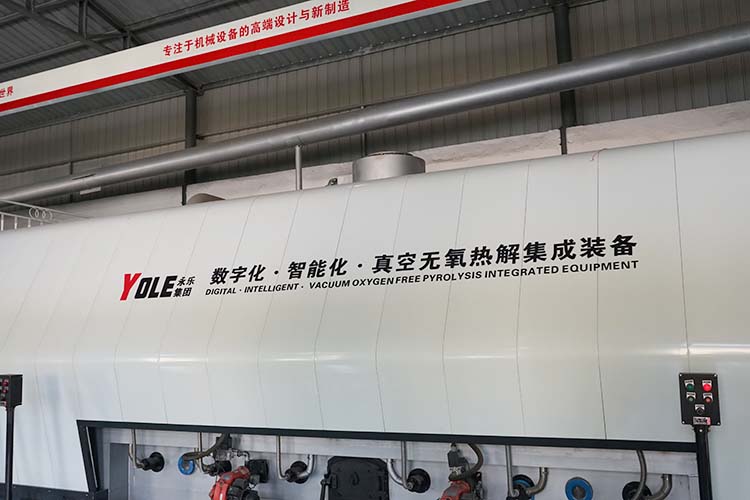
In actual industrial applications, waste tire refining equipment is suitable for various scenarios such as recycled resource industrial parks, solid waste treatment enterprises, and rubber recycling processing plants. The equipment can regularly digest the regional stock of waste tires, easing solid waste governance pressure and reducing ecological pollution risks. Meanwhile, the various recycled materials produced by the equipment can fill raw material gaps in downstream industries, improve the rubber resource recycling chain, and steadily promote the standardized and normalized development of the solid waste recycling industry.