Welcome to Yongle Group pyrolysis & refining equipment manufacturer. For product inquiries: nicole@yongleep.com



The continuous development of domestic transportation systems and industrial sectors has kept increasing the replacement frequency of vehicle and machinery tires, generating a stable annual stock of waste tires. Waste tires are composite rubber-plastic solid waste with strong structural stability and a long natural degradation cycle, and cannot be absorbed by the natural environment. Waste tires piled in the open for long periods not only occupy land resources, but the accumulated materials also easily collect water and become moldy, continuously affecting surrounding soil, air, and groundwater. As the solid waste governance system continues to improve, extensive stockpiling and simple landfill disposal are gradually being phased out, and the professional, resource-oriented, and harmless treatment of waste tires has become the mainstream development direction of the industry. Henan Yongle Group, based in the environmental protection equipment manufacturing field and combining domestic solid waste treatment standards with actual project conditions, develops and manufactures waste tire refining equipment, providing complete equipment solutions for the standardized disposal of rubber solid waste.
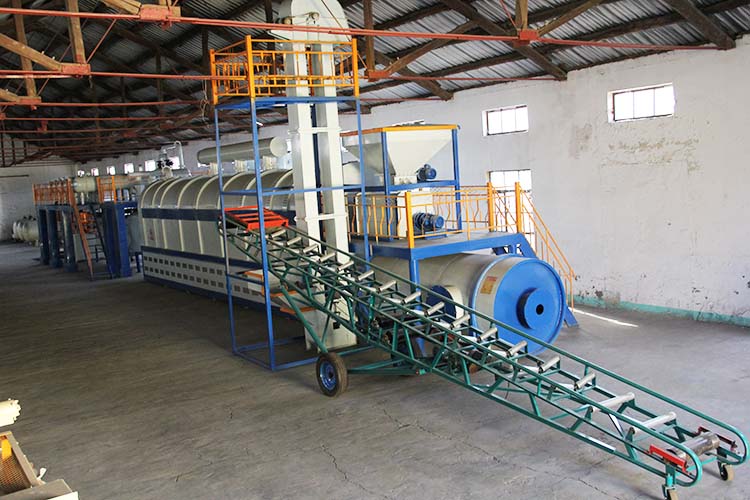
Waste tire refining equipment operates on a sealed oxygen-free pyrolysis process, with the entire workflow meeting clean production and environmental compliance requirements. The equipment completes the pyrolytic decomposition of waste tires inside a sealed chamber, stabilizing the reaction environment through a constant-temperature control system, and orderly separating the rubber components, steel wires, and fiber materials within the material. By-products such as tail gas generated during production are filtered, adsorbed, and harmlessly treated through the supporting multi-stage purification system, with final emission indicators meeting regional environmental control standards. The equipment adopts a fully sealed structural design to reduce dust diffusion and gas leakage at the source; no wastewater is discharged throughout production, avoiding secondary pollution and ensuring a clean and standardized plant working environment. The various materials treated by the equipment are clearly classified and stable in character, and can be put into industrial production as recycled raw materials, realizing the recycling and reuse of waste rubber resources.
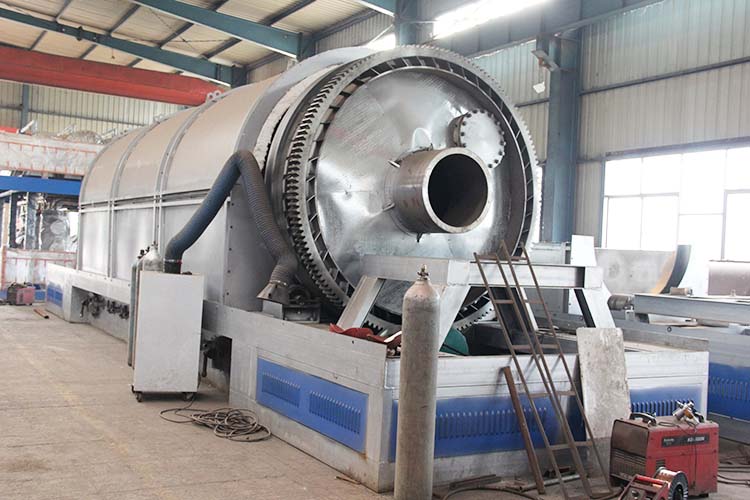
The complete equipment set adopts a modular integrated design, with each functional system clearly divided and operating in linkage. The pretreatment system is responsible for crushing, screening, and impurity removal of waste tires, unifying material specifications and ensuring uniform feeding; the pyrolysis reaction system completes the harmless conversion of materials in a sealed constant-temperature environment, reducing solid waste volume; the oil-gas separation system classifies, collects, and stores pyrolysis products; the tail gas purification system treats production exhaust gas throughout, keeping production compliant and orderly; and the intelligent control system collects equipment operating data to assist operators in adjusting operating parameters, reducing daily operation and maintenance difficulty. The overall process is smoothly connected and suitable for enterprises' long-term continuous solid waste treatment operations.
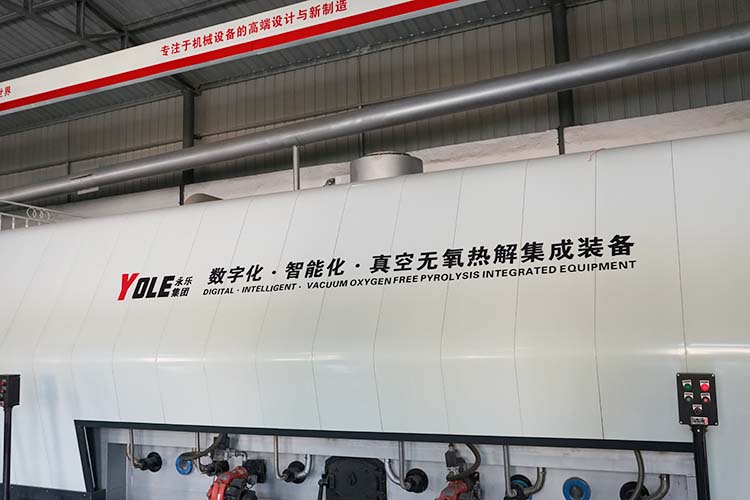
At present, this type of equipment is widely used in renewable resource industrial parks, solid waste treatment enterprises, rubber recycling and processing, and other scenarios. The normalized application of the equipment effectively digests regional waste tire stockpiles, relieves solid waste governance pressure, and reduces environmental hazards. At the same time, the recycling of regenerated materials improves the rubber resource circulation chain, providing fundamental support for the stable development of the regional circular economy.