Welcome to Yongle Group pyrolysis & refining equipment manufacturer. For product inquiries: nicole@yongleep.com


In the implementation of solid waste resource recovery projects, the stable operation of plastic refining equipment depends not only on the main cracking section but also, to a significant degree, on the adaptability of the tail gas treatment unit. A tail gas treatment device with a rational structure can work with the plastic refining equipment to buffer operating fluctuations and reduce operational risks caused by abnormal emissions. When addressing the needs of different projects, we make targeted adjustments to the tail gas module supporting the plastic refining equipment based on feedstock type and site conditions, keeping the process chain of the entire system coherent. Henan Yongle Group has, over years of equipment supporting practice, continuously collected operating data under various conditions to optimize the linkage logic between tail gas treatment and the plastic refining equipment.
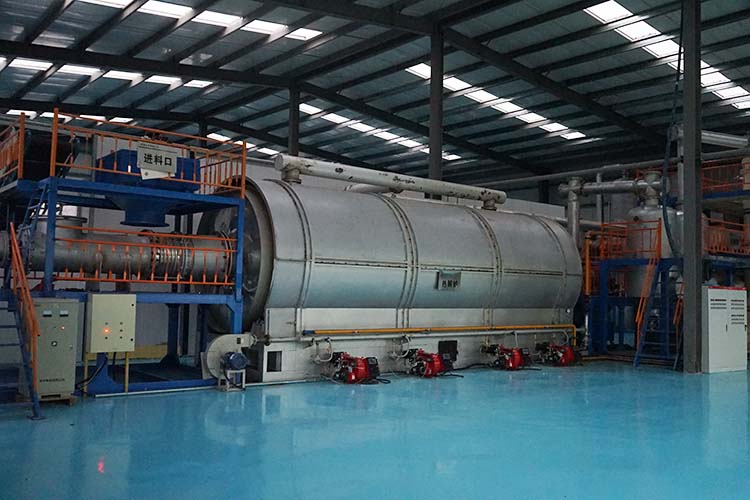
When the plastic refining equipment is in operation, a portion of non-condensable gas is produced. This gas can be fed back to the furnace as a heat source and is also a medium requiring key control in the tail gas treatment stage. If the tail gas recovery pipeline is poorly designed, it will not only reduce heat recovery efficiency but also disturb the internal pressure balance of the plastic refining equipment, causing unstable furnace conditions. At the design stage, technicians calculate gas flow and temperature parameters and match corresponding dust removal and cooling components to avoid common problems such as pipeline blockage and backfire.
Site layout directly affects the connection between the tail gas system and the plastic refining equipment. Some project sites have limited space and compact pipeline routing, in which case reserved maintenance space must be a priority. The placement of the tail gas tower, induced draft fan and gas storage components should facilitate daily inspection, allowing operators to regularly check sealing points and instrument readings and promptly detect pipeline aging, flange leakage and other issues. A well-organized layout can reduce the difficulty of subsequent maintenance of the entire installation.
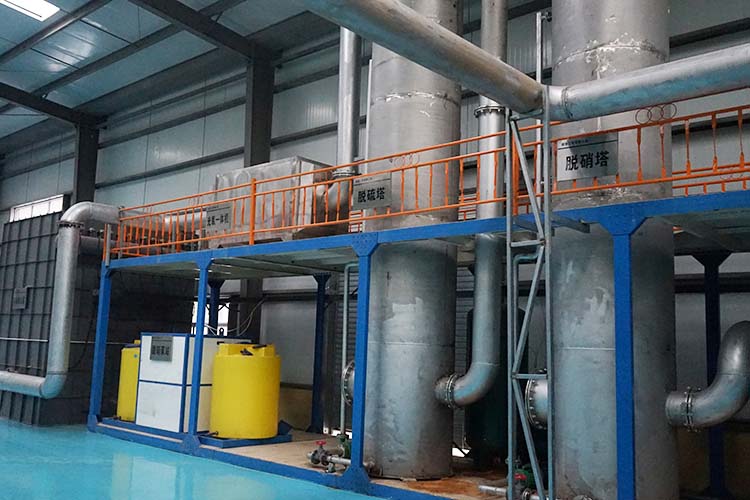
In daily operation and maintenance, the tail gas linkage parameters need minor adjustments according to changes in feedstock. Different types of waste plastics fed into the plastic refining equipment produce non-condensable gases with differing compositions, so the induced draft frequency and the replacement cycle of the spray liquid must be adapted accordingly. Operators need to be familiar with the entire linkage process, keep operating records, and, based on long-term data accumulation, identify the stable operating range suitable for the project in order to reduce frequent condition changes.
Material selection is another aspect of the tail gas supporting system that cannot be overlooked. The tail gas contains a small amount of corrosive components, and long-term contact will gradually erode pipelines and the tower body, so material selection must be determined with reference to the characteristics of the media. Unsuitable materials are prone to corrosion and perforation, which in turn affects the overall continuous operating time of the plastic refining equipment. During the scheme communication stage, we take the media characteristics and service life requirements into account and provide suitable material selection references.
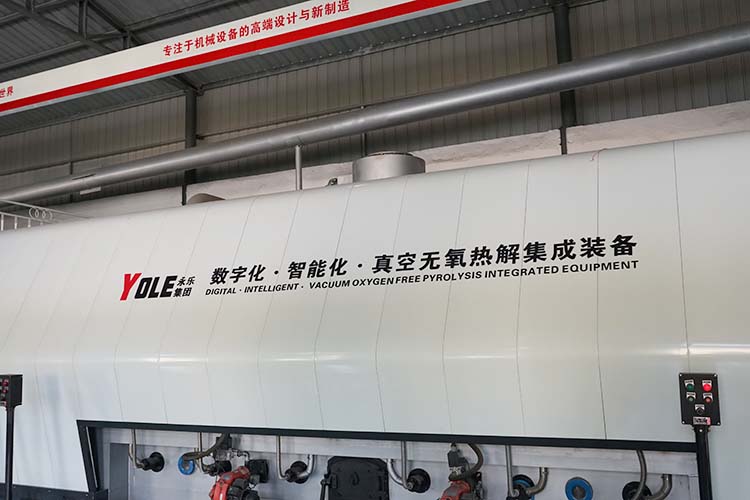
After project delivery, the technical team will help users become familiar with the operation of the entire system, explaining the start-up and shutdown sequences and emergency response procedures of the plastic refining equipment and the tail gas unit. Standardized operating habits can extend the service life of the entire installation and reduce the probability of failures. We also keep following up on project operation feedback, continuously improving the supporting schemes in light of actual usage scenarios to support the smooth implementation of solid waste pyrolysis projects.