Welcome to Yongle Group pyrolysis & refining equipment manufacturer. For product inquiries: nicole@yongleep.com


With the continuous development of modern industry and transportation, rubber products are used and replaced at an ever-faster pace, and the number of waste tires generated each year grows steadily. Waste tires are polymer-based composite solid waste with stable physical and chemical properties and a very slow rate of natural degradation. Long-term open-air stockpiling not only occupies land space but also tends to breed mosquitoes, accumulate rainwater, and release trace hazardous substances through natural weathering, affecting the surrounding soil and aquatic ecosystems. Volume reduction and harmless disposal of solid waste is a fundamental task in today's ecological governance; scientifically processing stockpiled waste tires and opening up resource regeneration channels is an important direction for circular economy development. Henan Yongle Group focuses on the R&D and manufacturing of environmental solid waste treatment equipment. Taking into account local environmental policies and on-site operating conditions, it has developed waste tire refining equipment, providing complete technical and equipment support for the standardized management of rubber solid waste.
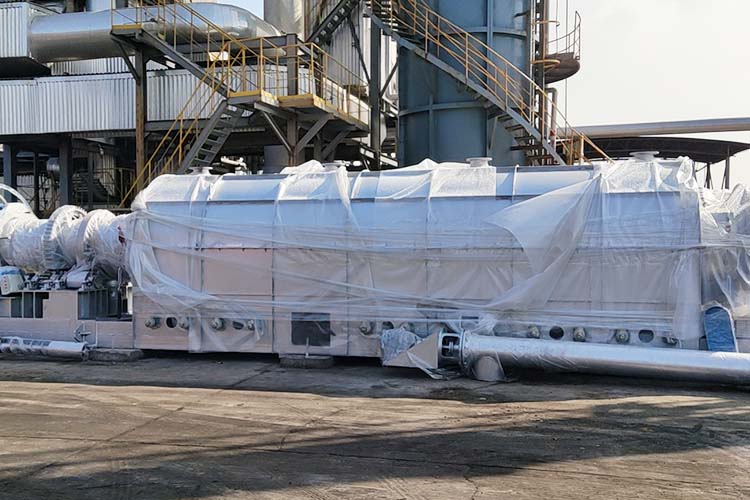
The waste tire refining equipment takes oxygen-free sealed pyrolysis as its core process, and the entire treatment workflow is designed in line with clean production standards. The equipment carries out the pyrolysis reaction of waste tires inside a sealed chamber, achieving smooth decomposition of materials through precise temperature control and systematically separating the organic components and solid materials in the feedstock. By-products such as tail gas and residues generated during production are harmlessly treated by the supporting multi-stage purification system, and the final emissions meet regional environmental control standards. The equipment adopts a fully enclosed body and pipeline structure, effectively containing dust diffusion and gas leakage; no process wastewater is discharged throughout production, preventing secondary pollution at the source and keeping the plant environment clean and orderly. After systematic treatment, the rubber, steel wire and nylon fiber in waste tires can be effectively separated, and the sorted materials can be put back into rubber and plastics processing, metal recycling and other industrial fields, effectively improving the resource utilization rate of solid waste.
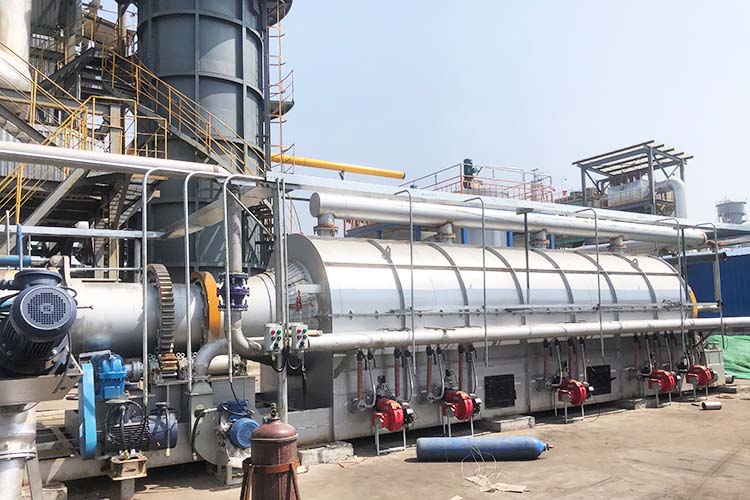
To adapt to the production needs of different sites, Henan Yongle Group continuously optimizes the modular structure of its waste tire refining equipment. The complete set of equipment consists of a raw material pretreatment system, a constant-temperature pyrolysis system, an oil-gas separation system, a tail gas purification system and an intelligent control system, with all modules working in coordination and closely linked processes. The pretreatment system handles the crushing, sorting and impurity removal of waste tires, unifying material specifications and removing sediment and debris to ensure uniform and stable feeding; the pyrolysis system completes the harmless conversion of materials in a constant-temperature, sealed environment, reducing the solid waste stock; the oil-gas separation system sorts the pyrolysis products for standardized material collection; the tail gas purification system filters and adsorbs exhaust layer by layer to keep production compliant; and the intelligent control system monitors equipment status in real time, helping operators adjust parameters and reducing maintenance difficulty.
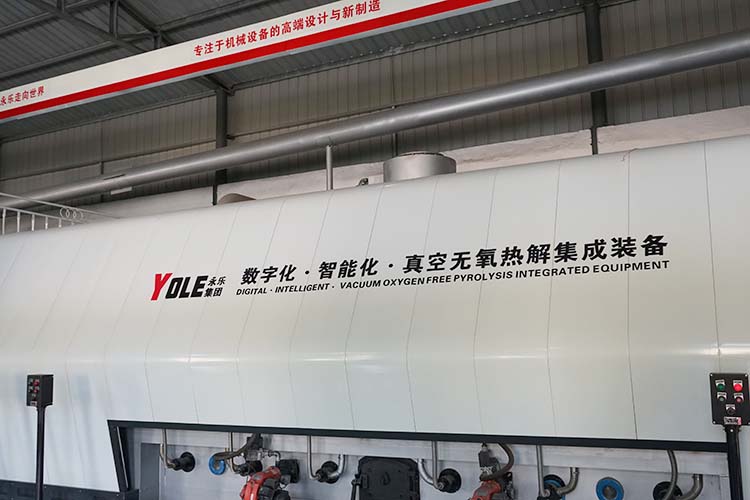
At present, the waste tire refining equipment is widely applied in renewable resource parks, solid waste treatment enterprises, rubber recycling and processing plants and other scenarios. It can continuously digest regionally accumulated waste tires, easing the pressure of solid waste stockpiling and reducing ecological and environmental risks. Meanwhile, the recycling of recovered materials effectively reduces the consumption of virgin resources, improves the regional resource recycling system, and provides solid support for the implementation of solid waste volume reduction.