Welcome to Yongle Group pyrolysis & refining equipment manufacturer. For product inquiries: nicole@yongleep.com



The continuous evolution of urban transportation, logistics, and engineering machinery keeps social waste tire generation at a stable volume. As composite polymer solid waste, waste tires are chemically stable with a long natural degradation cycle and cannot be harmlessly consumed by natural means. Random stockpiling and simple landfilling not only occupy land space but also, under natural factors such as rain scouring and temperature changes, affect surrounding soil, water bodies, and local air. Against the industry backdrop of solid waste reduction and resource circulation, traditional treatment methods can no longer meet current ecological governance requirements, and harmless, resource-oriented treatment of waste tires through pyrolysis technology has become the industry's mainstream technical path. Focused on the R&D and manufacturing of environmental solid waste treatment equipment, Henan Yongle Group builds waste tire refining equipment suited to various scenarios, combining industry technical standards with on-site working conditions, providing technical and equipment support for the standardized treatment of rubber solid waste.
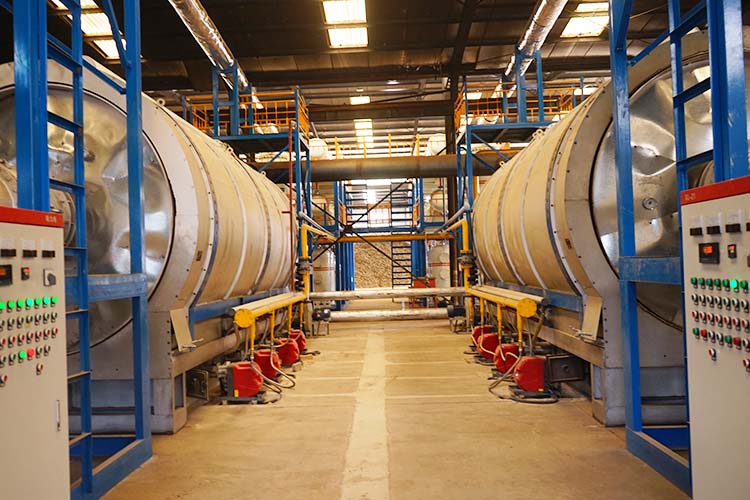
Waste tire refining equipment centers on sealed oxygen-free pyrolysis technology, with the entire workflow following cleaner production and environmental control regulations. In a completely sealed chamber, the equipment completes the cracking of waste tires under constant temperature control, orderly separating composite materials such as rubber, steel wire, and fiber, and achieving layered conversion of organic components and solid materials. Process by-products such as tail gas generated during operation are filtered, adsorbed, and rendered harmless through the equipment's supporting multi-stage purification system, with final emission indicators meeting regional environmental control standards. The integrated sealed structural design effectively controls dust dispersion and gas leakage; no process wastewater is discharged throughout production, preventing secondary pollution at the source and keeping the plant environment clean and orderly. Various materials processed by the equipment have stable properties and can serve as recycled raw materials in metal recovery, rubber and plastic processing, building materials production, and other industrial fields, achieving efficient recycling of waste rubber resources.
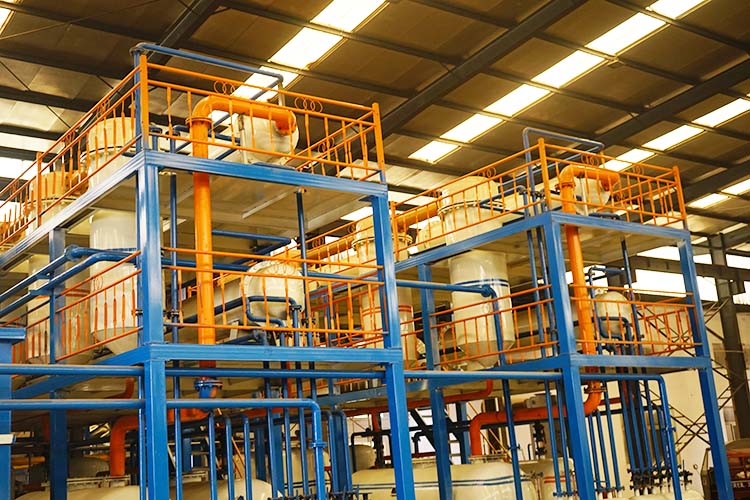
The complete unit adopts a modular integrated design, with each functional unit operating independently and in coordination, forming a complete closed-loop solid waste treatment system. The pretreatment unit mainly performs tire crushing, screening, and impurity removal, unifying material specifications, removing sand and debris, and ensuring uniform and stable feeding to lay the foundation for subsequent pyrolysis; the pyrolysis reaction unit maintains constant-temperature sealed conditions to ensure thorough material cracking, achieving harmless solid waste reduction; the oil-gas separation unit precisely categorizes and orderly collects mixed pyrolysis products, improving resource recovery rates; the tail gas purification unit treats process waste gas layer by layer, ensuring compliance and order throughout production; and the intelligent control unit monitors operating data in real time, assisting operators in adjusting condition parameters, simplifying daily maintenance, and meeting enterprises' long-term continuous operation needs.
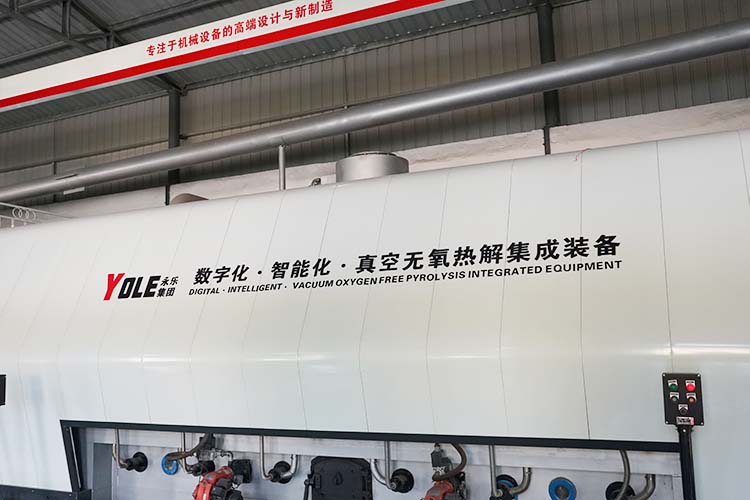
At present, the equipment is widely suited to various application scenarios such as renewable resource industrial parks, solid waste treatment enterprises, and rubber recycling plants. Its normalized application can effectively digest regional waste tire stockpiles, relieve solid waste treatment pressure, and reduce ecological environmental hazards. Meanwhile, the recycling and reuse of renewable resources improves the rubber industry's circular chain, providing solid support for the steady development of the regional circular economy.