Welcome to Yongle Group pyrolysis & refining equipment manufacturer. For product inquiries: nicole@yongleep.com



As urban and rural environmental governance becomes increasingly refined, the model of zone-based control, district governance and grouped operation and maintenance has gradually replaced traditional extensive management across entire areas, becoming the mainstream direction of sanitation work. Dividing township blocks, community clusters, suburban zones and industrial zones into districts, and implementing area-based contracting, nearby disposal and routine maintenance can effectively improve governance precision. In the past, the disposal model relying on centralized transfer stations involved long cross-district transport distances and many connection links, making it difficult to match the pace of zone-based governance and prone to problems such as delayed maintenance and disconnected disposal. Supporting small end-point disposal equipment and improving closed-loop governance units for each zone is a key measure to advance zone-based sanitation governance. Household waste treatment equipment, relying on the anaerobic low-temperature continuous pyrolysis process, meets the needs of zone-based, small-scale and nearby treatment, and supports the steady implementation of the zone-based sanitation governance model. Henan Yongle Group has optimized the equipment's flexible deployment and nearby disposal capabilities in line with the characteristics of zone operation and maintenance, providing hardware support for refined zone-based governance.
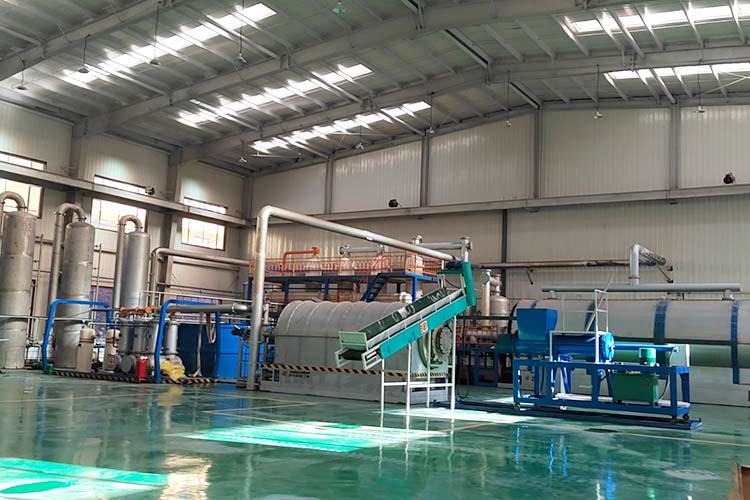
Household waste treatment equipment fits zone-based governance layouts. With moderate size and flexible deployment, it requires no large site or complex civil works and can be arranged as needed at sanitation support points in each governance zone, forming a grid-based governance pattern of one station per zone. The equipment is equipped with a sealed feeding system, an anaerobic pyrolysis reaction system, a product separation system, a tail gas purification system and an intelligent control system, and can independently complete the whole-process harmless treatment of household waste within a zone without relying on distant transfer stations.
The anaerobic low-temperature continuous pyrolysis process is highly adaptable to the daily mixed waste of a zone. Residents' kitchen residues, packaging waste, green waste and household sundries can all be treated together without tedious manual sorting, matching the scattered, multi-category waste output characteristics of daily zone life. The entire process operates in a sealed, oxygen-free environment with stable and mild conditions, no open flame and no smoke or dust overflow, causing no disturbance to the living, office or leisure environment of the zone and meeting the needs of normalized tidy maintenance.
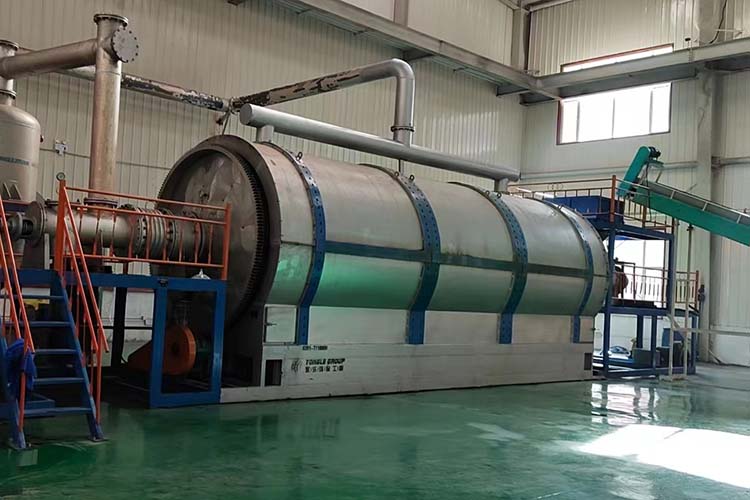
The on-site disposal model effectively shortens waste retention time, achieving daily clearance and immediate treatment of zone waste, and completely changes the previous lag problem of zone-based control combined with centralized disposal. Each zone independently completes its waste disposal work, reducing cross-zone transport capacity scheduling and long-distance transfer, and lowering the risk of secondary pollution during transfer, so that the environmental maintenance of every governance unit can be truly implemented.
The equipment's resource recycling system can serve the green operation and maintenance of zones. The self-sustaining gas generated by pyrolysis reduces the equipment's electricity consumption, and the harmless carbon residue can be used for zone greening maintenance and soil improvement, enabling each zone to achieve integrated operation of waste disposal, resource utilization and environmental maintenance, and improving the comprehensive benefits of zone governance.
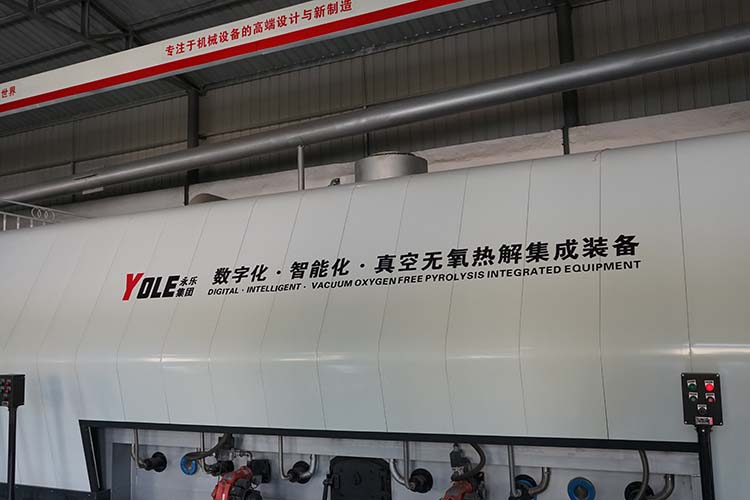
Zone-based sanitation governance is an important lever for refined maintenance. Henan Yongle Group continues to optimize the grid-based deployment and zone-based disposal capabilities of household waste treatment equipment to fit the rhythm of grassroots zone operation and maintenance, helping various regions build a new pattern of zone-based sanitation governance with clear rights and responsibilities, efficient disposal and effective maintenance.