Welcome to Yongle Group pyrolysis & refining equipment manufacturer. For product inquiries: nicole@yongleep.com


The continuous renewal of transportation and construction machinery generates a large number of waste rubber tires every year. This type of solid waste has a dense structure and strong weather resistance, and is difficult to degrade in the natural environment. Long-term stacking not only occupies land space, but also accumulates standing water and breeds pollutants, causing sustained impacts on regional soil and water ecosystems. Against the policy backdrop of normalized solid waste governance and normalized resource recycling, simple stacking and landfilling can no longer meet the industry's development requirements, and centralized, standardized, professional treatment of waste tires has become an important part of solid waste governance work in various regions. Henan Yongle Group, rooted in the environmental protection equipment manufacturing sector, develops and produces waste tire refining equipment in line with environmental control standards and on-site production conditions in different regions, providing mature complete solutions for the harmless disposal and resource utilization of rubber solid waste.
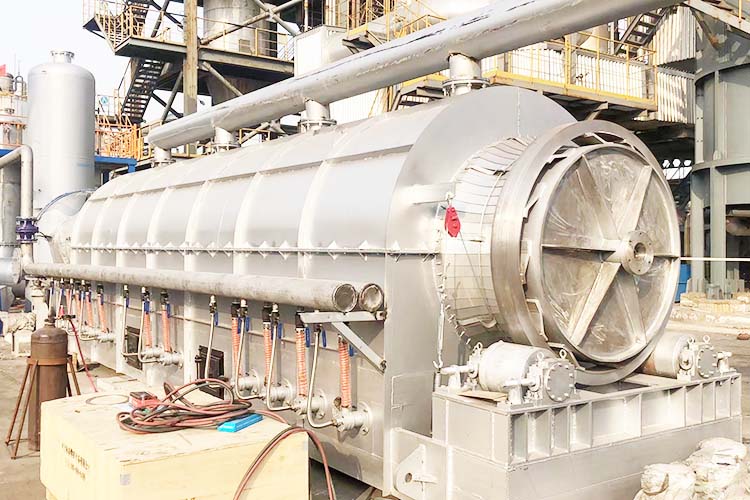
The waste tire refining equipment relies on a sealed pyrolysis process to process materials, and the entire production process follows cleaner production and environmental compliance requirements. The equipment completes the pyrolysis and cracking of waste tires in an oxygen-isolated sealed reaction chamber, regulating the reaction progress through gradient temperature control to orderly separate composite materials such as rubber, steel wire, and fiber, achieving the separation and conversion of organic components and solid materials. Trace process tail gas generated during production is filtered, adsorbed, and harmlessly treated by a supporting multi-stage purification system, with final emission indicators meeting local environmental control standards. The equipment adopts an overall enclosed pipeline and body structure, effectively reducing dust diffusion and gas leakage, produces no process wastewater during production, avoids secondary pollution at the source, and keeps the plant environment clean and orderly. The various recycled materials treated by the equipment are stable in character and can be supplied to metal recycling, industrial fuel, rubber and plastics auxiliary material production, and other fields, realizing the recycling and reuse of waste rubber resources.
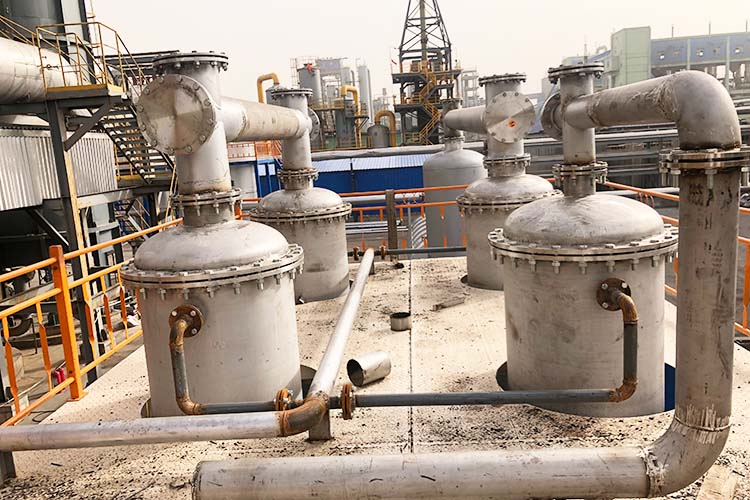
The complete set of equipment adopts a standardized, modular design, with each functional system having a clear division of labor and linked operation. The pretreatment system completes the crushing, screening, and impurity cleaning of waste tires, unifying particle size, removing sand and debris, and ensuring uniform and stable feeding; the pyrolysis reaction system maintains a sealed constant-temperature environment to promote full material cracking and complete harmless volume reduction of solid waste; the oil-gas separation system sorts and collects pyrolysis mixed products by category and grade, standardizing material storage; the tail gas purification system continuously treats process exhaust to ensure compliance throughout production; and the intelligent control system collects equipment operating data, helps operators adjust conditions, reduces daily maintenance difficulty, and adapts to the enterprise's long-term continuous production.
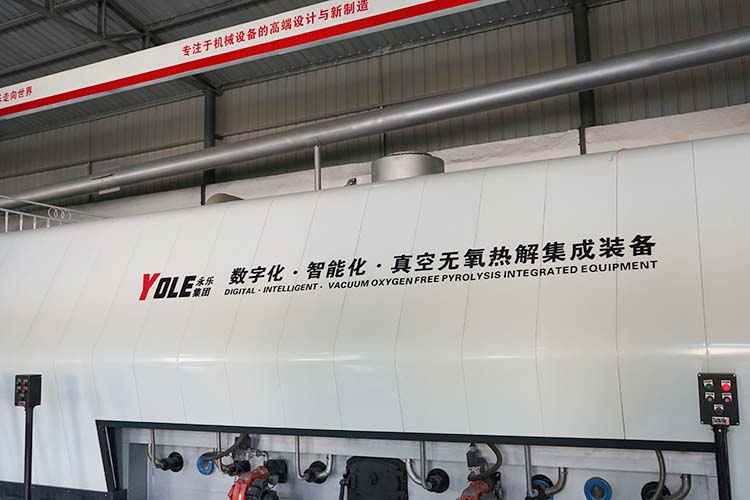
The equipment is suitable for various scenarios such as recycled resource industrial parks, solid waste treatment enterprises, and rubber recycling bases. Its continuous application can effectively digest regional waste tire stocks, relieve solid waste governance pressure, improve the rubber resource recycling industrial chain, and provide basic support for the steady advancement of the regional circular economy.